
About me
Who am I
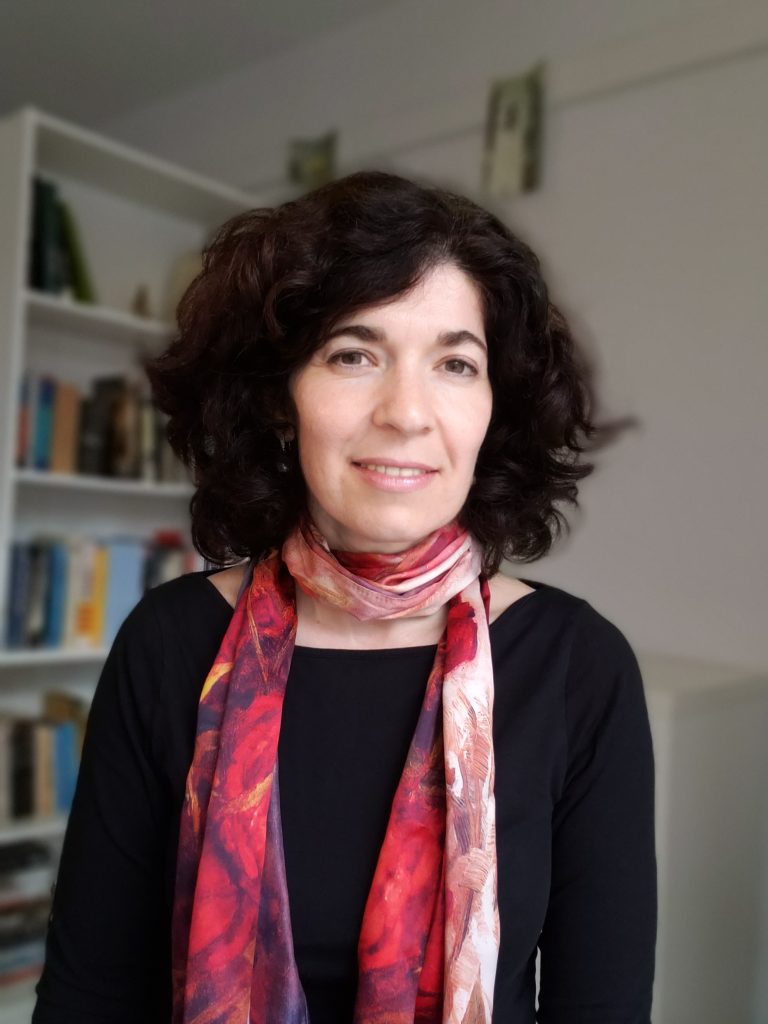
I am a psychotherapist, an educator and a movement practitioner. My main area of interest is the connection between the body and the mind, and with personal change and growth. I have been investigating this subject for more than 20 years through different methods. Understanding the relationship between our bodies and our emotional, mental, and social responses is at the heart of my practice, and I offer this knowledge to my clients and students. I am very interested in questions of personal change and the creative ways that people find to integrate and re-invent themselves. In my work, I offer opportunities for development that might take time and effort but aims to achieve recovery, healing, and subsequently growth.
My approach
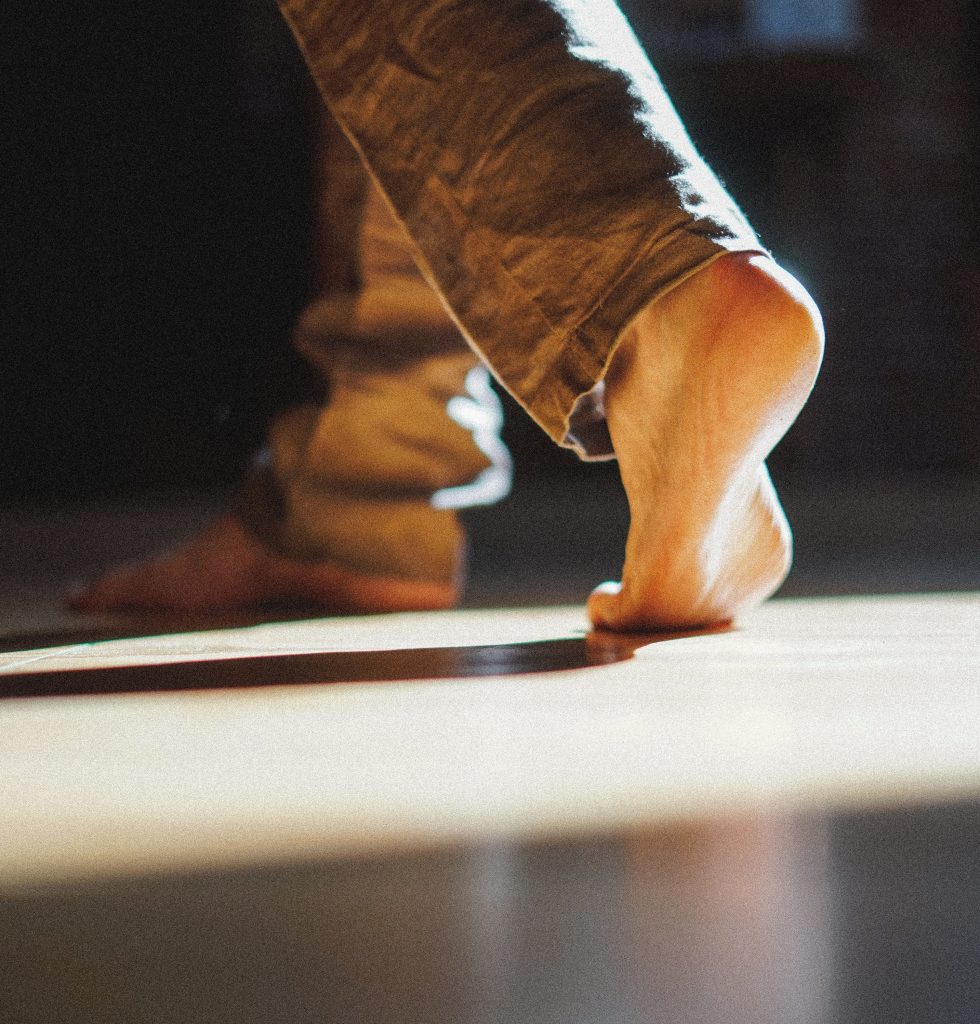
I combine creativity, embodied methods, and the use of talking as I see it as an overall balanced approach that brings about good results. In practice, this means you have the freedom and autonomy to choose how you wish to investigate and explore your own process – by talking, moving, drawing, meditating, etc. In my opinion, the most important thing in therapy is for people to feel comfortable enough to express themselves, and secure enough to explore whichever themes that they wish. Ultimately, the function of therapy is to help people find their own individual path that will lead to change, recovery, and healing. While there are no shortcuts, I see my role as a therapist to support people on their journey and help them to overcome obstacles and come closer to their goals.
Work method
How I work
I offer psychotherapy sessions that combine talking with creative, embodied, and artistic methods, such as movement, dance, art-making and meditation.
We organise the sessions according to your needs and preferences, as well as the type of work we do (in-person or online, individual, couples work or group).
The aim is to facilitate autonomy, choice and empowerment. Together we will create a working method suitable for you and which will best support your process and progress.
I use verbal and non-verbal methods to explore thoughts, feelings and embodied information held in the body.
This work aims to help you (re)connect to yourself, your intuition and creative force. The focus is on understanding past and present experiences and emotional patterns better.
Learning to listen to the body more and to detect emotional cues can lead to a more authentic way of living. Active use of creativity helps to overcome obstacles, change patterns and to ensure your life is heading in the direction you want it to go.
My background
Psychotherapy
I qualified as a Dance Movement Psychotherapist in 2012 with an MSc (Queen Margaret University, UK). I undertook a PhD in 2014 to research the use of dance movement psychotherapy and creative arts therapies for the treatment of trauma (Edge Hill University, UK), and was awarded my doctorate in 2019.
I worked in the NHS (UK) with clients suffering from chronic pain and trauma. I also worked as a creative and play therapist in primary schools in England, with children, their parents, and school staff. I have been working with the general public, integrating embodied and creative methods to facilitate therapeutic exploration since I qualified.
I have worked with clients from a wide range of backgrounds, including expats and professionals, immigrants and refugees, children in both special and mainstream education (and their parents/carers). I now focus on adults who wish to develop and grow, parenting support, and those who experience anxiety, depression, grief, and trauma.

My background
Teaching
I have been teaching in higher education and in professional and vocational training programmes for over 15 years. I have been delivering specialised training (CPDs) for practitioners working with clients dealing with mental health issues. I have also been running embodied wellbeing workshops for individuals interested in self-development and growth.
My main areas of teaching have been mental health issues, understanding and working with trauma, and the use of embodied and creative methods for professional and personal development. For example, embodied and creative concepts that can help practitioners build resilience and prevent burnout, and so increasing their skill mix and professional confidence.
In higher education, I taught qualitative research methods and performance, and supervised and tutored students in theoretical and applied subjects. Located in the fields of performing arts and vocational mental-health practices, emphasizing self-awareness, creativity, and the importance of understanding embodiment.
my background
Embodied practice
I have been investigating the connection between body and mind for over 25 years and have explored many embodied practices during this time. I mention here the systems I found to be the most well-founded and reliable, the ones that have been informing my clinical practice and the way I teach and work with clients.
Psychotherapy:
I started my training in Dance Movement psychotherapy in 2009. I was delighted to find a form of psychotherapy that integrates ideas like non-verbal communication, symbolic movement exploration, and creative expression. I was especially interested in the discipline of Authentic Movement, to which I was introduced by Fran Leventhal (UK), who trained and practised with Janet Adler (USA). This practice focuses on leading people to become more aware, authentic and connected, through the combined use of movement and verbal exploration. I still practice it, and use many elements of this discipline in my clinical work and teaching. I then went on to research the creative-embodied therapeutic process and its components, in relation to psychological trauma, and completed my PhD in 2019.
Dance:
Having danced different methods in my youth, including classical and contemporary ballet, I have been less inclined to continue with the formal, technical styles and I have been dancing 5 rhythms since 2013. I have found this dance practice to be very useful in terms of strengthening the relationship with the body and making it a positive one, open and free. The dance can often allow for the healthy release of built-up tension and for connecting authentically with others in the group. I have been dancing with many 5 Rhythm teachers in the UK, many of whom have worked and danced with Gabriel Roth (d. 2012).
Spiritual practice:
I started practising Astanga yoga, including pranayama and chanting, in 1999 and followed that method for about seven years until it became clear its strong and strenuous approach was unsuitable for my body. I then changed directions and started practising Taiji quan (tai chi) in 2007, with Patrick A. Kelly (NZ/CH), who was a student of Master Huang Xingxian (d. 1992), who in turn was a student of Grandmaster Cheng Man-Ch’ing (d. 1975). I still follow this system today and it is the best I have found to date that supports internal growth and an ever-increasing connection between the body and the mind.
Contact details
Get in touch
info@carolinegalon.com
Address
Santa Coloma de Farners, Cat., Spain 93150
Hours
Mon – Fri: 9am – 8pm
Saturday: 10am – 2pm